Backgorund
The Commons
Humans have long relied on shared information as a means of survival and to make sense of the world.
Long before newspapers, communities passed knowledge through stories, records, and collective memory. As communication systems evolved, journalism became one of society’s primary tools for determining what information mattered and preserving it for public use.
The system has never been perfect, but it created something essential: a shared commons. A body of information people could reference, question, debate, and recognize as real.
The Fragmentation
That shared reality is becoming harder to maintain.
Today information is decentralized, personalized, and shaped by algorithms. Journalism travels alongside opinion, entertainment, speculation, and AI-generated content, usually through the same platforms and at the same speed.
We’ve gone from information scarcity to information overload. The challenge is no longer finding information, it's knowing what should be believed.
Solution
Beyond Neutrality
Legacy journalism built trust on objectivity and restraint. But in an environment filled with competing versions of reality, neutrality risks reading as dishonesty.
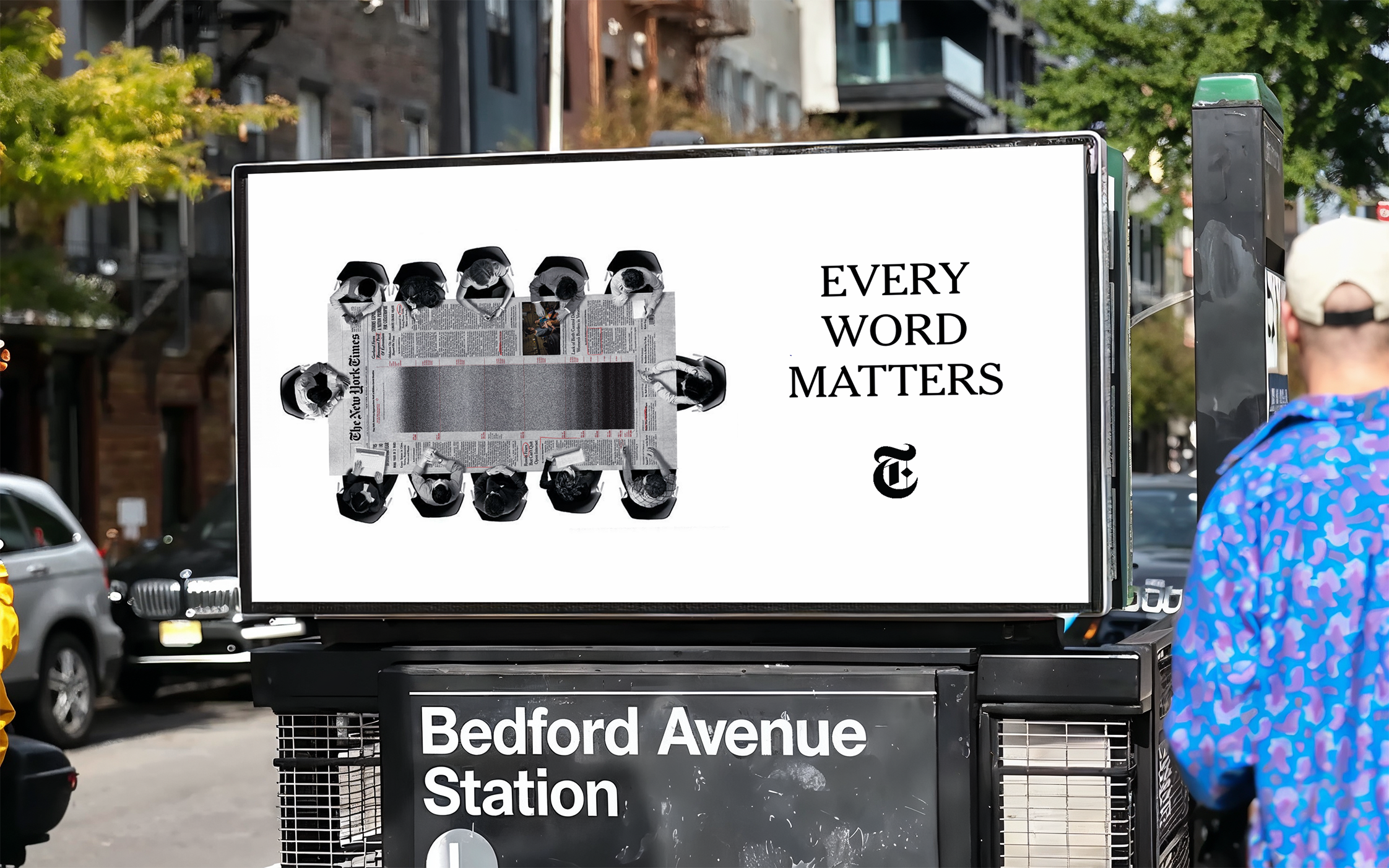
The opportunity now is for The New York Times to move from simply observing events to more visibly defending the standards used to establish what is true.
Truth is not the midpoint between competing opinions. It is the result of evidence, verification, and accountability.
The Weight of the Word
The strategic shift reframes The New York Times from a neutral observer into an institution defined by its unwavering allegiance to truth.
That commitment doesn't stop at what the Times says about itself. It extends itself into the organization's reporting, decisions and standards.
Credits
Role
Editorial Strategy
Narrative Systems
Cultural Analysis
Campaign Strategy
Team
Ashley O'connor
Piyush Bhagat
Dianna Loevner
Advisors
Dr. Tom Guarriello
Mark Kingsley
Robin Scheines
Thesis Chair